

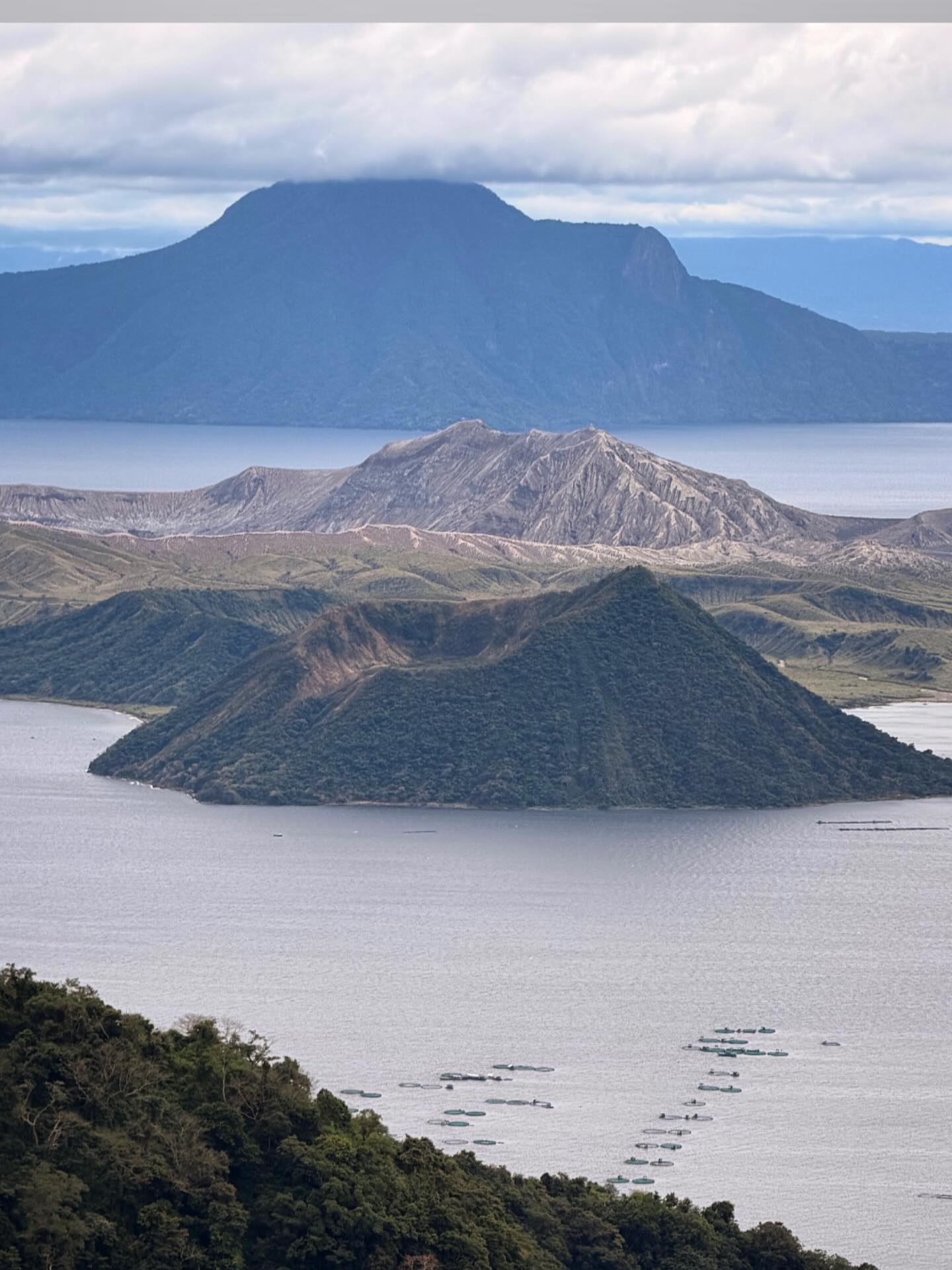
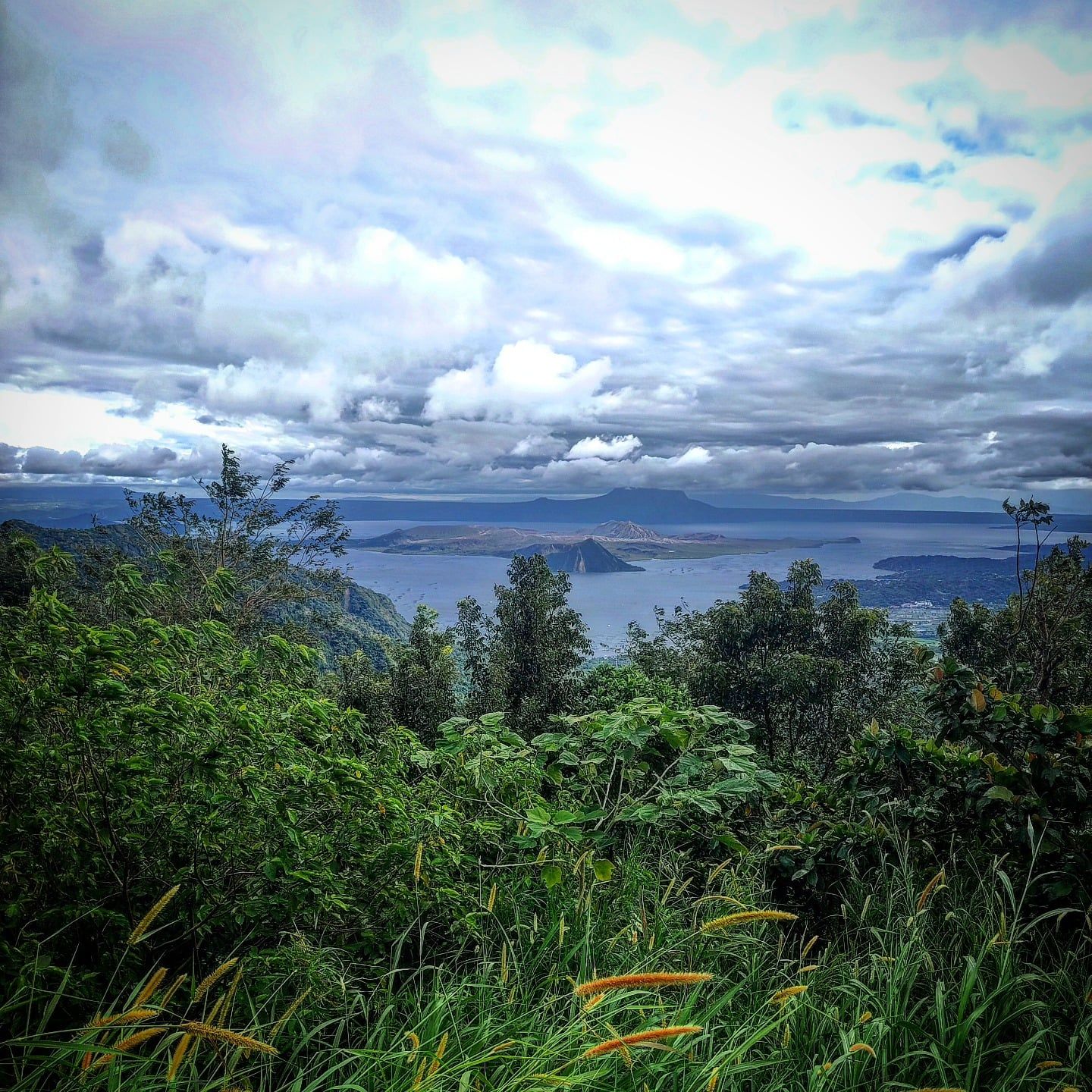
Located 50 kilometers south of Manila, Taal Volcano is a highly active complex caldera featuring 47 overlapping cones and craters. Visitors can view the 1.2-square-kilometer Main Crater Lake and its iconic Vulcan Point rock from the elevated Tagaytay ridge.
Find Guided ToursTaal Volcano is a highly active complex volcano located in the province of Batangas, approximately 50 kilometers south of Manila. It sits at the southwestern end of a convergent boundary between the Eurasian and Philippine Sea tectonic plates. The system centers around an 18-mile-diameter caldera filled by the 265-square-kilometer Taal Lake, which reaches depths of 100 to 150 meters.
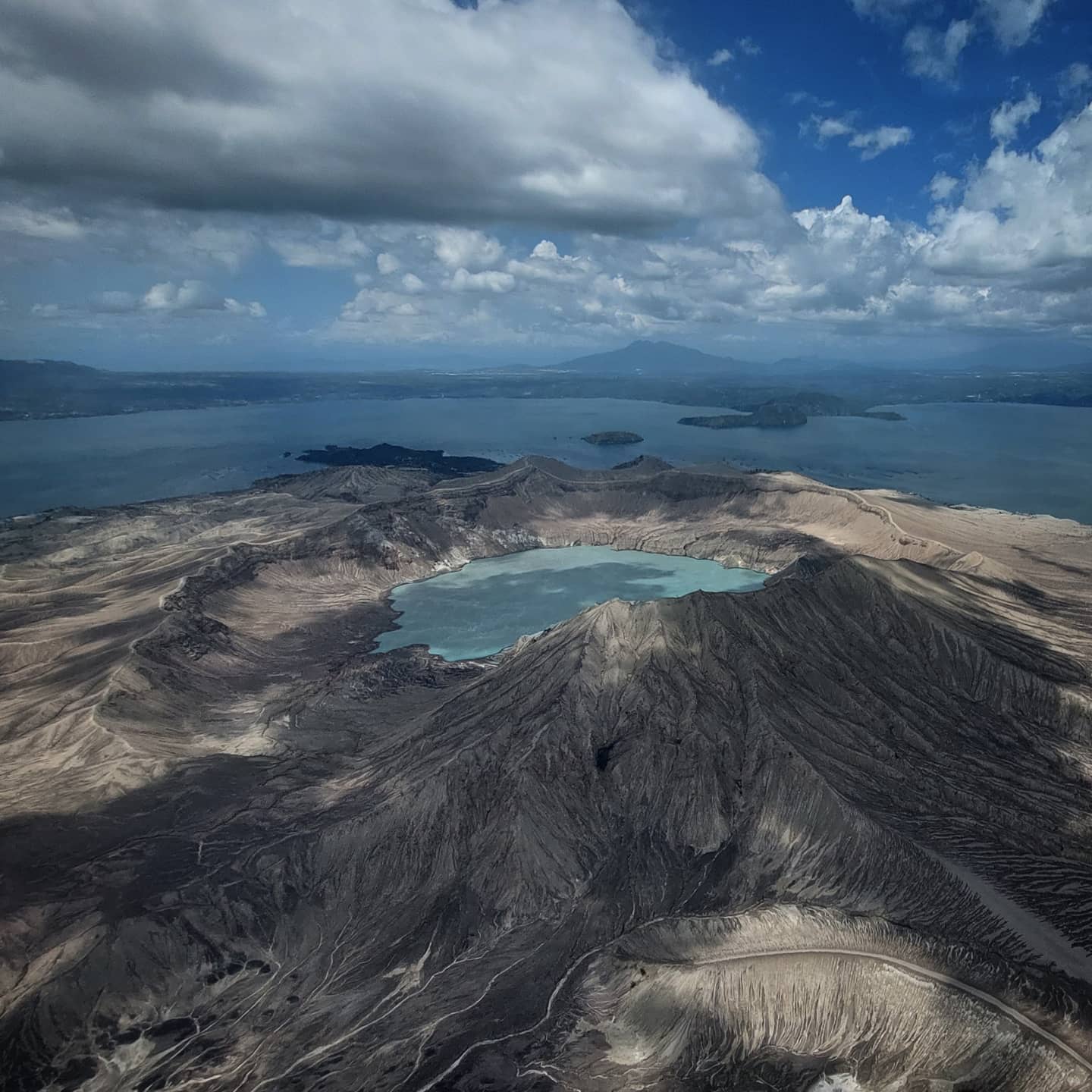
The volcano is famous for its unusual concentric geological structure. At the center of Taal Lake is Volcano Island, a 23-square-kilometer landmass consisting of 47 overlapping cones and craters rising to an elevation of 400 meters. Inside this island is the 1.2-square-kilometer Main Crater Lake. Within that lake sits Vulcan Point, a small rocky remnant that forms an island within a lake, on an island within a lake.
The massive Taal caldera was created by prehistoric eruptions that occurred between 140,000 and 5,380 BCE. Since 1572, the volcano has recorded 39 historical eruptions. A notable VEI 2 eruption in 1707 formed the 263-meter-tall Binintiang Malaki cone, while a devastating VEI 4 eruption occurred in September 1965. More recently, a major phreatic-to-magmatic eruption on January 12, 2020, blanketed the surrounding Calabarzon region and Metro Manila in thick ash.
These events have resulted in an estimated overall death toll of over 5,000 people. Due to its violent eruptive history and proximity to heavily populated areas, Taal is designated as one of the world's 16 Decade Volcanoes. Despite the risks, the surrounding fertile volcanic soils have historically supported rich agricultural traditions, including local coffee cultivation. The Philippine government declared the site a National Geological Monument in 1998 and a national park in 2018.

Discover the full history and cultural significance on our About page.
Board a traditional motorized outrigger boat at Talisay to cross the deep waters of Taal Lake. Gliding over this massive 265-square-kilometer body of water provides an exhilarating perspective of the dramatic volcanic walls rising in the distance before you reach the island.
Reach the summit rim to look down at the emerald-green Main Crater Lake. From these viewing platforms, you can spot Vulcan Point, a unique rocky remnant forming an island inside a lake, which sits on an island within another lake. Active fumaroles emit white steam along the shoreline.
Pay a fifty-peso fee to walk just off the main trail and enter a stark, Martian-like landscape. This distinct vantage point surrounds hikers with rich red volcanic rock and provides sweeping panoramic views across the expansive 18-mile-diameter caldera system.
Walk up the rugged, sun-drenched paths of Volcano Island for a rewarding physical challenge. The exposed trail takes about an hour to climb, leading hikers past pockets of active steam venting directly from the ground while local horses kick up dust along the steep mountain slopes.
Hand-picked tours with free cancellation and verified reviews
 Free Cancellation
  Free Cancellation 12h
  Free Cancellation
  Free Cancellation
  Free Cancellation 12h
  Free Cancellation
  Free Cancellation
  Free Cancellation
 The optimal time to visit Taal Volcano is during the dry season from November to May. These months provide clear skies and excellent visibility for observing the crater without the disruption of heavy rains.
This period falls at the end of the dry season, offering clear skies and excellent visibility for photography. Visitors avoid low-hanging clouds that can block views of the crater.
These months mark the start of the wet season, making it the worst time to visit. Heavy rains cause slippery trails and low visibility, severely impacting safety and crater views.
September and October bring heavy rains and slippery trails from the wet season. Conditions improve significantly in November as the dry season begins, clearing the skies for better visibility.
Falling squarely within the dry season, these months offer ideal hiking conditions. Visitors can expect clear skies and minimal rain, ensuring unobstructed panoramic views of the 265-square-kilometer caldera lake.
The volcano is technically open year-round, 24/7. Regular boat tours from the Talisay Boat Station operate from 6:00 AM to 4:00 PM, while the local tourism office opens at 4:00 AM for early visitors.
| Category | Price |
|---|---|
| Admission to view the volcano | Free |
| Environmental Fee (Adult) | ₱100 |
| Environmental Fee (Child) | ₱50 |
| Port Landing Fee | ₱10 |
| Red Lava Viewpoint Access | ₱50 |
| Local Guide Fee | ₱500 |
| Horseback Riding (Optional) | ₱500 - ₱600 |
| Return Boat Trip (Up to 7 passengers) | ₱1,500 - ₱2,000 |
The Philippine Government has declared the entire Volcano Island a Permanent Danger Zone (PDZ). Actual physical access, landing on the island, and hiking the trails are currently strictly prohibited without official authorization.
For complete schedules and ticket prices, visit our Hours & Fees page.
Reaching Taal Volcano from Manila requires a multi-leg transit heading 50 kilometers south. Travelers typically take a bus to the Tagaytay ridge, hire local transport down to the lake, and cross the water by boat.
📍 Volcano Island, Taal Lake, Batangas, Philippines
Depart from major Manila transit hubs like the Buendia or Pasay City terminals. Board a southbound bus destined for Tagaytay to cover the 50 to 53-kilometer distance. Alight at either the Tagaytay Rotunda or Olivarez Plaza. These stops function as the primary transit points for organizing the next leg of your trip down to the lake.
From the Tagaytay town center, hire a local motorized tricycle to reach the lakeside town of Talisay. The 10-kilometer route follows a steep, winding mountain road directly down the caldera ridge. Rates fluctuate significantly between different local drivers. You must negotiate the fare clearly before starting the ride to avoid overpaying.
Head to the Talisay Boat Station to secure a traditional motorized outrigger boat for the final 5-kilometer crossing. The ride across the deep waters of Taal Lake takes about 20 minutes to reach Volcano Island. The standard rate covers a return trip for a group of up to six or seven passengers.
For detailed transport options and routes, visit our Directions page.
Plan to reach the Talisay Boat Station right when regular tours begin at 6:00 AM. This early start helps you avoid intense midday heat and heavy crowds. Morning light also provides excellent visibility for photography during the dry season from November to May.
Active volcanic gases and sulfur dioxide frequently vent from the crater. Pack your own N95 mask before arriving, as local towns often run out of supplies. This is especially important for protecting your respiratory system if emissions increase during your visit.
Operators at the Talisay Boat Station often quote varying rates to tourists. Before boarding, confirm a flat roundtrip rate for the traditional motorized outrigger boat. A fair price ranges from ₱1,500 to ₱2,000, which covers up to six or seven passengers.
The steep volcanic trails are completely exposed to the sun and rising ground temperatures. Wear non-slip hiking shoes to handle the uneven, sandy terrain. You should also carry at least two liters of water and pack extra clothes due to the heavy dust.
The Philippine Government designates the entire Volcano Island as a Permanent Danger Zone. Physical access is currently prohibited to protect public safety. Always check current PHIVOLCS alerts and avoid local tricycle drivers or boat owners who falsely claim the hiking trails are open.
Bring your camera to capture panoramic views of the 265-square-kilometer caldera lake. Do not hand your equipment to locals offering to take your picture, as they will likely demand payment afterward. Additionally, keep drones packed away since PHIVOLCS restricts flying over the island.
Located on the northern ridge of the caldera, this leisure hub provides cool mountain air and panoramic views of the volcano. Visitors can explore local coffee plantations and dine at viewpoints overlooking the 265-square-kilometer lake.
Established in 1572, this town preserves Spanish colonial architecture and historic ancestral homes. It houses the Basilica of St. Martin of Tours, Asia's largest Catholic church, alongside shops selling traditional embroidery and balisong knives.
Situated at the highest elevation in Tagaytay City, this historical park delivers a 360-degree view across Batangas and Cavite. The vantage point provides a sweeping perspective of the entire 18-mile-diameter Taal caldera system.
Read what travelers share about their experience visiting Taal Volcano — from practical tips to personal highlights.


The Philippine Government has declared Volcano Island a Permanent Danger Zone, making physical access and hiking strictly prohibited due to ongoing seismic activity. Tourists can still get spectacular panoramic views of the volcano from Tagaytay Ridge, located 9 kilometers north of the lake.
Take a two-hour bus ride from the Buendia or Pasay City terminals to Tagaytay Rotunda, which costs between ₱70 and ₱121. From the Tagaytay town center, hire a local tricycle for ₱100 to ₱300 to travel 10 kilometers down the steep mountain road to Talisay.
A roundtrip boat ride from the Talisay Boat Station across Taal Lake typically costs between ₱1,500 and ₱2,000. This rate covers a traditional motorized outrigger boat for up to six or seven passengers.
While viewing the volcano is free, local tourism requires a ₱100 environmental fee for adults and ₱50 for children, plus a ₱10 port landing fee. Other potential costs include a ₱500 local guide fee and a ₱50 charge to access the Red Lava Viewpoint.
The dry season from November to May is the best time to visit because it provides clear skies and excellent visibility for photography. Avoid the wet season from June to October, as heavy rains cause low visibility and slippery trails.
Regular boat tours from the Talisay Boat Station operate from 6:00 AM to 4:00 PM daily. The local tourism office in Talisay opens as early as 4:00 AM to register visitors and process environmental fees.
Bring at least two liters of water, sun protection, and comfortable, non-slip hiking shoes for the uneven terrain. You must also pack an N95 dust mask to protect your respiratory system from active sulfur dioxide gas emissions and volcanic ash.
The rugged, sandy terrain makes it impossible for wheelchair users to navigate. The extreme heat, lack of shade, and toxic sulfur dioxide fumes also make the environment highly unsafe for young children and physically strenuous for the elderly.
Browse verified tours with free cancellation and instant confirmation.
Find Tours